
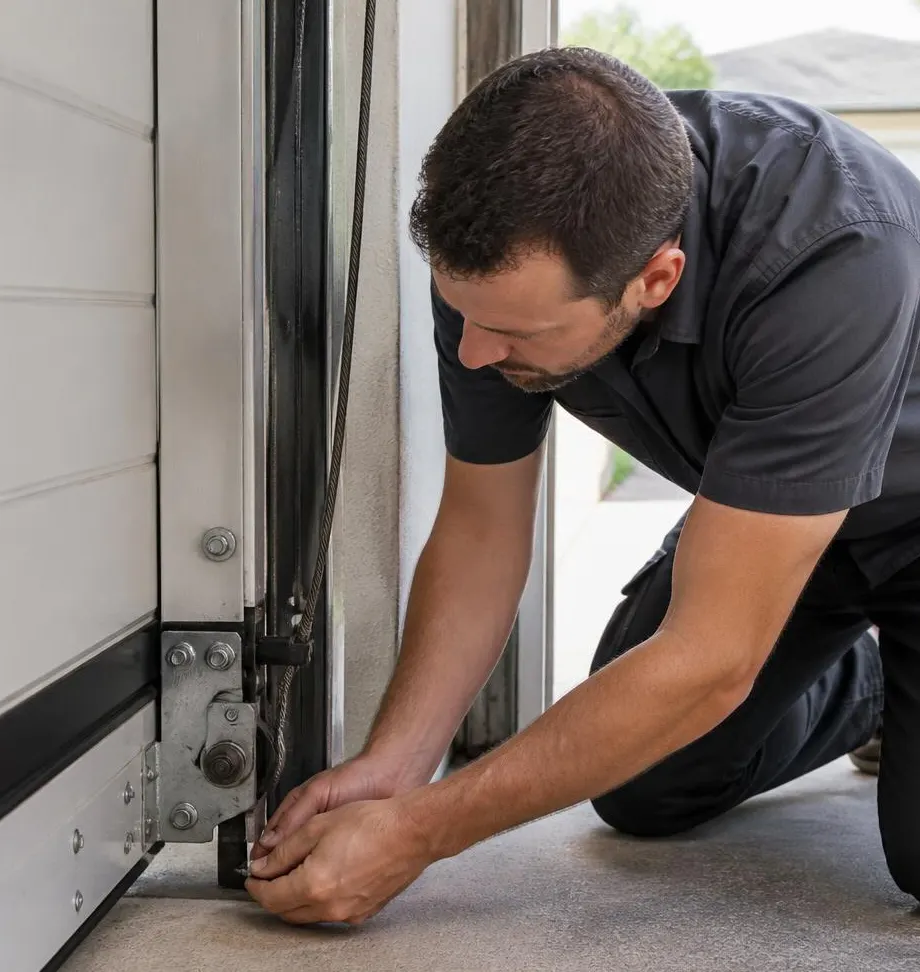
What a Technician Sees on These Calls
A typical service call starts with a homeowner pointing at a door that used to work fine. Sometimes it's a wood door that's swollen shut along the bottom panel after a stretch of afternoon downpours, the track pulling loose as the wood pushes against it. Other times it's a steel door with bubbling paint and a rust spot creeping out from a small dent near the bottom corner, right where lawn irrigation or salt-laden air hits it daily. On older aluminum doors, we often find a dented panel from a stray branch or a trash can, with the frame slightly bowed because the material wasn't built for wind load. Each of these calls traces back to the same root issue: the door material wasn't matched well to this climate, or it wasn't maintained for it.
Steel
Steel is the most common garage door material in this area, and for good reason. It's affordable, available in a wide range of styles, and can be engineered to meet wind-load requirements when reinforced with heavier gauge panels and bracing.
- Strengths: Strong, consistent performance, holds paint well when properly coated, widely available in insulated and non-insulated versions.
- Weaknesses: Prone to rust at dents, scratches, or cut edges, especially closer to the coast where salt air accelerates corrosion. Thinner gauge steel can dent easily from storm debris.
- Climate fit: Good, provided it's galvanized and has a quality factory finish. Touch up scratches quickly to prevent rust from spreading.
Wood
Wood doors offer a level of curb appeal that other materials struggle to match, especially on custom or historic-style homes. But wood and Florida humidity have a complicated relationship.
- Strengths: Unmatched natural look, can be custom-stained or painted, repairable in sections if damage is localized.
- Weaknesses: Absorbs moisture and swells during humid stretches and heavy rain, which can cause sticking, warping, or misalignment with the tracks. Requires regular sealing and refinishing to prevent rot.
- Climate fit: Workable only with disciplined maintenance. Expect to reseal or restain more often here than in drier climates, and budget time for upkeep after hurricane season storms.
Aluminum
Aluminum doors are lightweight and naturally resistant to rust, which makes them appealing near the water. The trade-off is durability against impact.
- Strengths: Won't rust like steel, lighter weight reduces strain on openers and springs, often more affordable than wood or composite.
- Weaknesses: Dents easily from storm debris or accidental impact, and lighter gauge aluminum can struggle to meet wind-load standards without added reinforcement. Salt air can still cause pitting or oxidation on unfinished surfaces over time.
- Climate fit: Decent for coastal corrosion resistance, but verify wind-load reinforcement before installing near open, storm-exposed areas.
Fiberglass
Fiberglass doors are often used to mimic the look of wood without the moisture problems, which makes them a reasonable middle ground for humid, salty air.
- Strengths: Resists moisture, won't rot or rust, holds up well in salt air, lighter than solid wood.
- Weaknesses: Can become brittle and crack over years of intense sun and heat exposure, especially on south- or west-facing doors. Harder to repair invisibly if a panel cracks.
- Climate fit: Solid choice for salt air resistance, but UV exposure over time is a real factor to plan for.
Composite
Composite doors blend engineered wood fibers with protective coatings, aiming to combine wood's appearance with better resistance to the elements.
- Strengths: Resists swelling, warping, and rot far better than solid wood, holds paint and stain well, generally handles humidity and coastal air with less maintenance.
- Weaknesses: Higher upfront cost than steel or aluminum, and quality varies significantly between manufacturers.
- Climate fit: One of the better low-maintenance options for humid, storm-prone, salt-air conditions, if budget allows.
Trade-Offs in Plain Terms
If you want the lowest maintenance and best value, steel with a quality galvanized finish and wind-load-rated bracing is hard to beat for most homes here. If you want a wood look without the humidity headaches, composite is the stronger long-term investment over solid wood. Aluminum suits homes prioritizing weight and rust resistance over dent resistance, and fiberglass works well for moisture resistance if you're mindful of long-term sun exposure.
A Practical Recommendation for Typical Homes Here
For most homes across Palm Valley, Ponte Vedra Beach, Nocatee, and the surrounding coastal communities, a reinforced steel door with a factory-applied finish rated for wind load tends to offer the best balance of cost, durability, and resistance to humidity and salt air. Homeowners wanting a wood aesthetic without constant upkeep are usually better served by composite doors, especially on homes closer to the water where salt exposure is highest.
When to Call Palm Valley Garage Door Repair
If your current door is rusting at the seams, warping after storms, or you're planning a material upgrade before the next hurricane season, it's worth having it assessed before small issues become bigger repairs. We handle Garage Door Panel Replacement for doors with isolated rust or storm damage, and our Garage Door Tune-Up & Maintenance service checks hardware, seals, and alignment so moisture and salt air don't cause premature wear. We'll also walk you through material options suited to your home's exposure and wind-load needs.
If your garage door is showing signs of wear from Florida's heat, humidity, or coastal air, call Palm Valley Garage Door Repair today for a straightforward assessment and honest recommendation.