
The Mistake Most Homeowners Make First
When a garage door stops opening, almost everyone reaches for the remote and mashes the button a few extra times, then heads to the wall switch and does the same thing. It's tempting because the opener is the part you interact with every day — it's electronic, it's visible, and swapping a battery or reprogramming a remote feels like a five-minute fix. The problem is that in a large share of "door won't open" calls, the opener is working perfectly fine. The motor hums, the light turns on, but the door itself is mechanically stuck or unsafe to move — often because a spring has broken or a cable has snapped. Forcing the opener to keep trying in that situation can strip the gear or burn out the motor, turning a $150-$400 spring repair into a $300-$600 double repair.
Symptoms First: What Are You Actually Seeing?
Before chasing a cause, it helps to describe the symptom precisely, since the symptom points a technician toward a different starting point:
- Complete silence — no motor sound, no light, nothing happens when you press the button.
- Motor hums but the door doesn't move — you hear effort, but no travel.
- Door opens a few inches then reverses or stops — it starts moving, then quits.
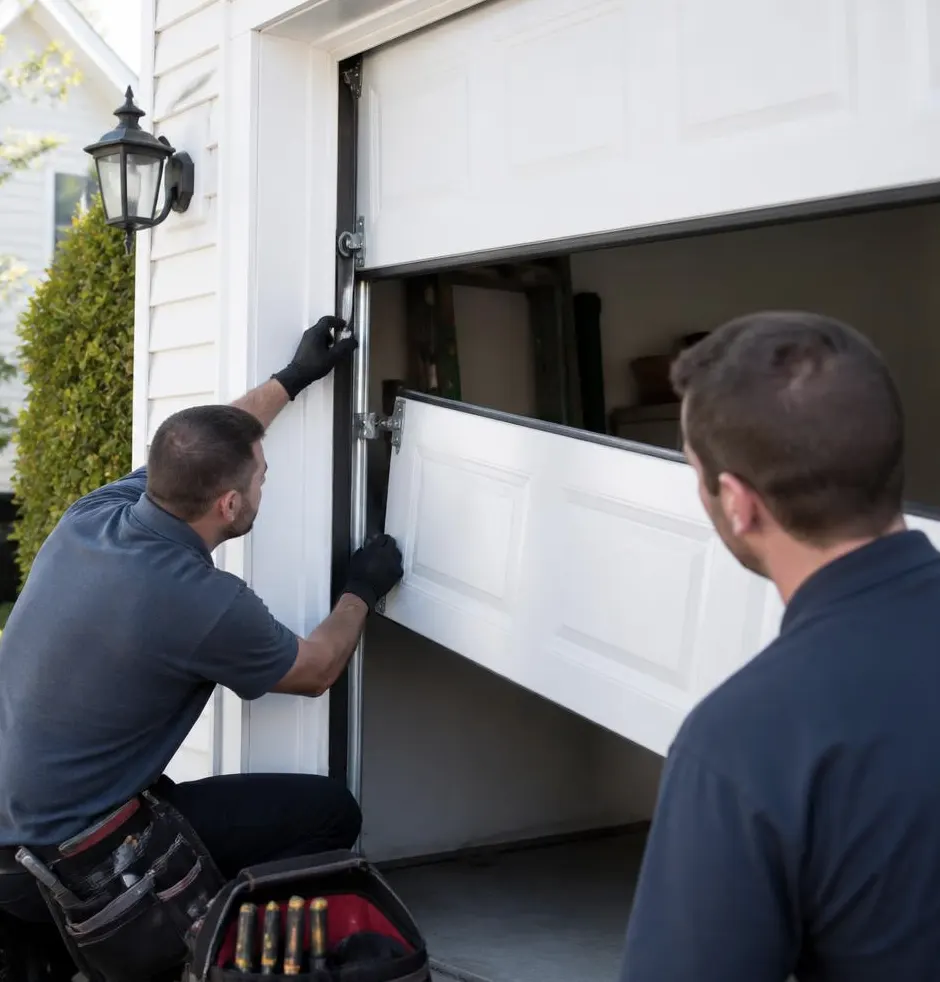
- Door opens but looks crooked, or one side lags behind the other.
- The opener light blinks a code, or the remote works intermittently depending on where you stand.
Each of these narrows down where the actual fault lives, and that's the order a technician works through next.
The Diagnostic Order a Technician Follows
1. Power and Safety Sensors
This is checked first because it's fast and it's the most common innocent cause. A tripped breaker, an unplugged opener cord, or dirty/misaligned photo-eye sensors near the floor will stop a door cold or make it reverse immediately. Coastal humidity and afternoon downpours can fog or splash the sensor lenses, and condensation inside the lens housing is a real seasonal issue here. The fix is simply wiping the lenses, realigning the sensor brackets so their indicator lights stay solid, and resetting the breaker or outlet.
2. Remote, Wall Control, and Opener Programming
Next comes the control side: dead remote batteries, a wall switch with a loose wire, or an opener that's lost its program after a power outage during a storm. This is checked before touching the motor because it's cheap to rule out and explains intermittent failures. The fix here is battery replacement, rewiring a loose switch connection, or reprogramming the opener's memory.
3. The Opener's Drive Mechanism
If power and controls check out, the technician looks at the opener itself — the chain, belt, or screw drive, and the trolley that connects it to the door. A stripped gear, a slipped belt, or a disconnected emergency release cord (sometimes pulled by accident) will cause the motor to run while the door stays put. The fix ranges from re-engaging the trolley to replacing an internal gear, which on an older unit sometimes makes more sense to address during a full opener replacement instead.
4. Springs
This is usually the real culprit when the door won't move at all and the opener seems to be struggling or has stopped responding to prevent damage. A broken torsion spring (mounted above the door) or a snapped extension spring (along the upper tracks) removes the counterbalance that makes a 150-plus pound door liftable. Salt air speeds up spring corrosion along the coast, and swollen wood-and-steel doors add extra strain during humid months, both of which shorten spring life. Spring replacement requires winding bars and precise tension work and is not a DIY repair — a snapped spring under tension can cause serious injury.
5. Cables
Next, the lift cables that run alongside the springs are checked for fraying or snapping off the drum. A broken cable lets one side of the door drop while the other stays up, which explains a crooked or jammed door. Replacement means rethreading new cable under controlled tension, matched to the door's weight and spring setup.
6. Tracks and Rollers
If the door is visibly off to one side or grinding partway through its travel, bent tracks or worn rollers are checked next. Humidity swelling and rust from salt exposure both accelerate roller wear and can nudge tracks out of alignment over time. The fix is realigning or replacing the track section and swapping worn rollers for nylon or sealed-bearing versions that hold up better in coastal conditions.
7. Panels and Manual Locks
Last, a technician checks for a warped or storm-damaged panel binding against the frame, or a manual lock bar that got engaged by accident. Wind-load-rated doors are built to resist flex, but a hard impact or long-term humidity swelling can still cause a panel to bind. This may call for a single panel replacement rather than a full door swap.
When to Call Palm Valley Garage Door Repair
If you've checked the power, sensors, and remote and the door still won't move — or if you hear a loud bang before it stopped working, which usually means a spring let go — stop trying the opener and call us. Our Garage Door Spring Repair service replaces broken torsion and extension springs with properly matched, wind-rated hardware, and if cables or rollers are also compromised, our Off Track Door Repair visit covers realignment and worn-part replacement in the same trip. We diagnose in the same order outlined above so you're not paying to replace parts that were never the problem.
If your garage door in Palm Valley, FL has stopped opening or is acting up before this season's storms roll through, call Palm Valley Garage Door Repair today for a fast, honest diagnosis and same-week repair.