
You're pulling boxes down off a shelf and notice a thin line of daylight glowing along the bottom of the closed garage door. Or maybe it's the morning after a hard rain and there's a damp stripe across the concrete, right where the door meets the slab. Sometimes it's smaller still: a trail of ants working their way in at one corner, or a film of fine dust settled over everything after a windy week. All of these point to the same culprit — a worn-out bottom seal or weatherstripping that's no longer doing its job.
This is one of the cheapest, most overlooked fixes on a garage door, and it matters more here than in a lot of places. Between salt-laden coastal air, swings in humidity that make wood and composite panels swell and shrink, and the afternoon downpours that roll through this part of Florida, a gappy seal lets in more than a little light. It lets in water, pests, dust, and the kind of damp air that speeds up rust on hinges, tracks, and springs.
What These Seals Actually Do
A garage door has three weatherstripping points: the bottom seal (sometimes called the astragal) that runs along the floor, vertical weatherstripping along both side jambs, and a top seal along the header. Together they're the only barrier between your garage and the outside. When any of them crack, flatten, or pull loose, they stop compressing against the slab or frame — and that's when you get the gaps.
Tools You'll Need
- Tape measure
- Utility knife or sharp box cutter
- Flathead screwdriver or pry bar
- Replacement bottom seal (sold by track style — bead, T-end, or bulb) matched to your door's retainer channel
- Vinyl weatherstripping strips for the side and top jambs, plus galvanized nails or a staple gun if yours is nailed rather than tracked
- Mild soapy water or silicone spray lubricant
- Shop vac or stiff broom
- Work gloves
Step-by-Step: Replacing the Bottom Seal
- Confirm where the gap is. Close the door during daylight and look for light along the bottom and sides. Run a hand along the base from end to end — a seal that's flattened, cracked, or torn will feel uneven or won't spring back when pressed.
- Identify your track style. Open the garage and look at the retainer under the door. It will hold either a bead-shaped seal, a T-end seal, or a bulb-style seal. Bring a cut sample or a clear photo with you when buying a replacement — the wrong profile won't seat in the channel.
- Remove the old seal. Most slide out of the retainer by pulling from one end. If it's brittle or stuck, a flathead screwdriver can help work it loose without damaging the track.
- Clean the channel. Years of grit, salt residue, and old rubber flakes build up inside the retainer. Wipe or vacuum it out so the new seal can seat fully.
- Measure and cut the new seal to the width of your door, leaving a small amount of extra length rather than cutting it flush — you can trim later.
- Feed the new seal into the track. This is where soapy water earns its keep: a light coating on the seal's edge lets it slide through tight bead or T-channels without tearing.
- Trim the ends flush once the door is closed and the seal is seated evenly across the full width.
- Check the side and top weatherstripping while you're at it. Vinyl strips nailed to the jambs often curl or split from UV exposure and humidity. Pry out old nails, press the new strip against the frame, and re-nail every few inches.
- Test it. Close the door and check for light gaps again. If you can, watch how it holds up during the next rain — a good seal should leave the slab dry right up to the door's edge.
- While the door's open, lubricate hinges and rollers with a garage-door-rated lubricant. You're already in there, and salt air corrodes bare metal fast.
What's Reasonable for a Homeowner to Handle
Swapping a bottom seal and side weatherstripping on a standard sectional steel door is a solid weekend project if the door itself opens, closes, and sits level. Budget somewhere in the range of $20–$60 in materials for most single-car doors, more for double-wide.
When It's a Job for a Technician
Some situations go past a seal swap:
- The door is off its track, binding, or doesn't close evenly — a new seal won't fix an alignment problem, and forcing it can mask a bigger issue.
- The retainer track itself is bent, rusted through, or corroded from years of salt exposure near the coast, so a new seal won't stay seated no matter how carefully it's installed.
- Water is pooling under the door even with a fresh seal, which usually points to an uneven slab or missing threshold rather than a worn strip of rubber.
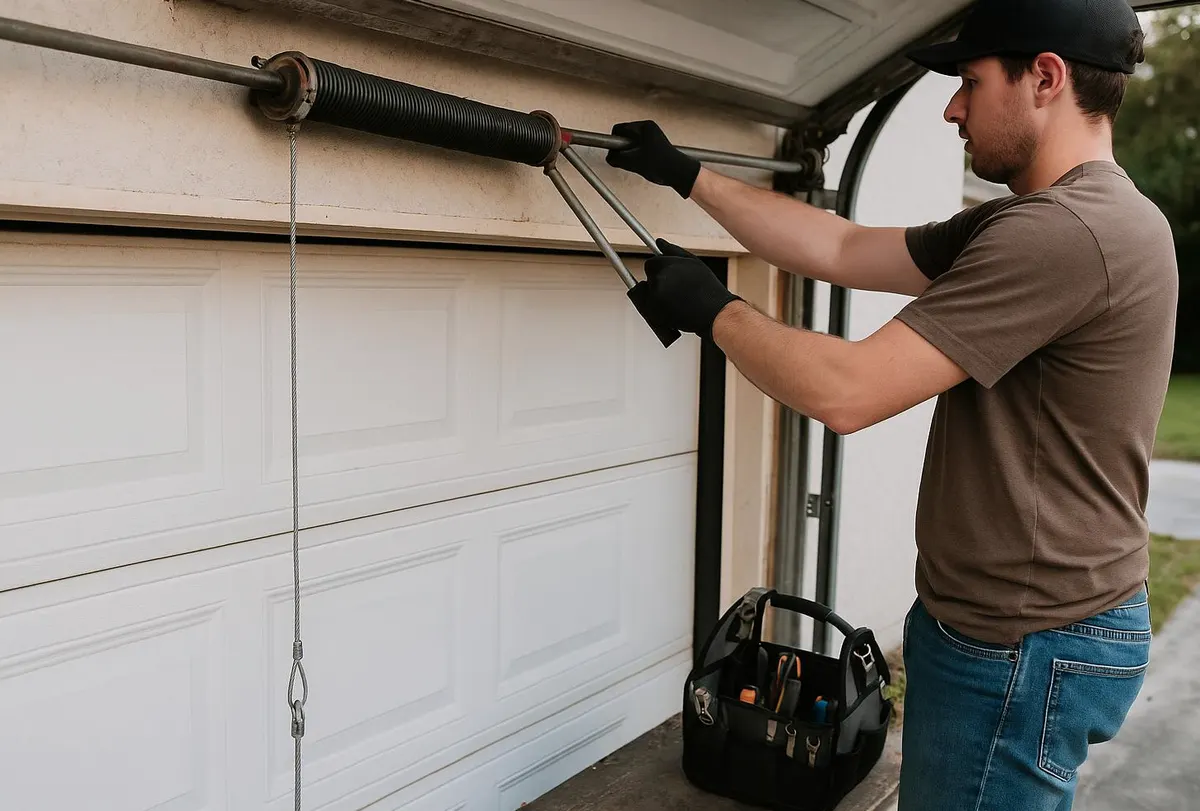
- Accessing the bottom bar means loosening cables or working near a torsion spring — that's not a DIY step, since springs under tension can cause serious injury.
When to Call Palm Valley Garage Door Repair
If you've replaced the seal and still see gaps, hear the door rattle against the frame, or notice the bottom bar is bent or chewed up by rust, it's time to call us. We handle Garage Door Panel Replacement when a section is too warped or corroded for a seal to grip properly, and our Garage Door Tune-Up & Maintenance visits include checking track alignment, roller condition, and hardware corrosion — the kind of underlying issues that cause seals to fail again within a season.
If your garage door is leaking light, water, or dust no matter what you try, give Palm Valley Garage Door Repair a call. We serve Palm Valley, Ponte Vedra Beach, Ponte Vedra, Jacksonville Beach, Neptune Beach, Atlantic Beach, Nocatee, and St. Augustine, and we'll get your door sealed up right before the next storm rolls through.